Your first supplier will shape your brand more than any decision you make about the store itself.
Fabric quality, finishing accuracy, whether deliveries arrive when they were promised, whether messages get answered — all of it lands on your customer, and all of it comes back to you as reviews, returns and repeat orders. Choosing an abaya supplier is not a purchasing decision, it's a decision about what your brand will be able to promise. The Arabic version of this guide puts it at 70% of the store's success, and that is not far off: the store is what customers see, but the supplier is what they receive. In this guide, you'll learn the seven criteria that established Saudi abaya labels use to select and keep their suppliers, plus how to work with factories and workshops across Saudi Arabia and the Gulf.
Choose an abaya supplier on seven criteria: consistent fabric quality across batches, reliable delivery timing, a minimum order quantity you can afford, transparent written pricing, fast responses, the ability to produce your own designs, and a clear defect return policy. Test all seven before you commit to volume.
📌 Article overview
- Why the supplier decision carries so much weight
- The seven criteria professional merchants use
- How many suppliers you actually need
- Frequently asked questions
- Further reading
🧭 Why this decision carries so much weight
A store can be rebuilt in an afternoon. A brand reputation cannot. Every complaint an abaya store receives traces back to one of four things: the fabric wasn't what the photos suggested, the stitching or embroidery was off, the order arrived late, or nobody answered when the customer asked. Three of those four are the supplier's work, and the fourth is often the supplier's delay showing up as your silence.
The trap is that supplier quality is easy to assess once and hard to assess repeatedly. A first sample is almost always good — it's a sales pitch. What you actually need to know is whether the third batch will match the first. That is what the criteria below are designed to surface before you have money committed.
✅ The seven criteria for choosing an abaya supplier
These are the checks professional merchants run before signing anything.
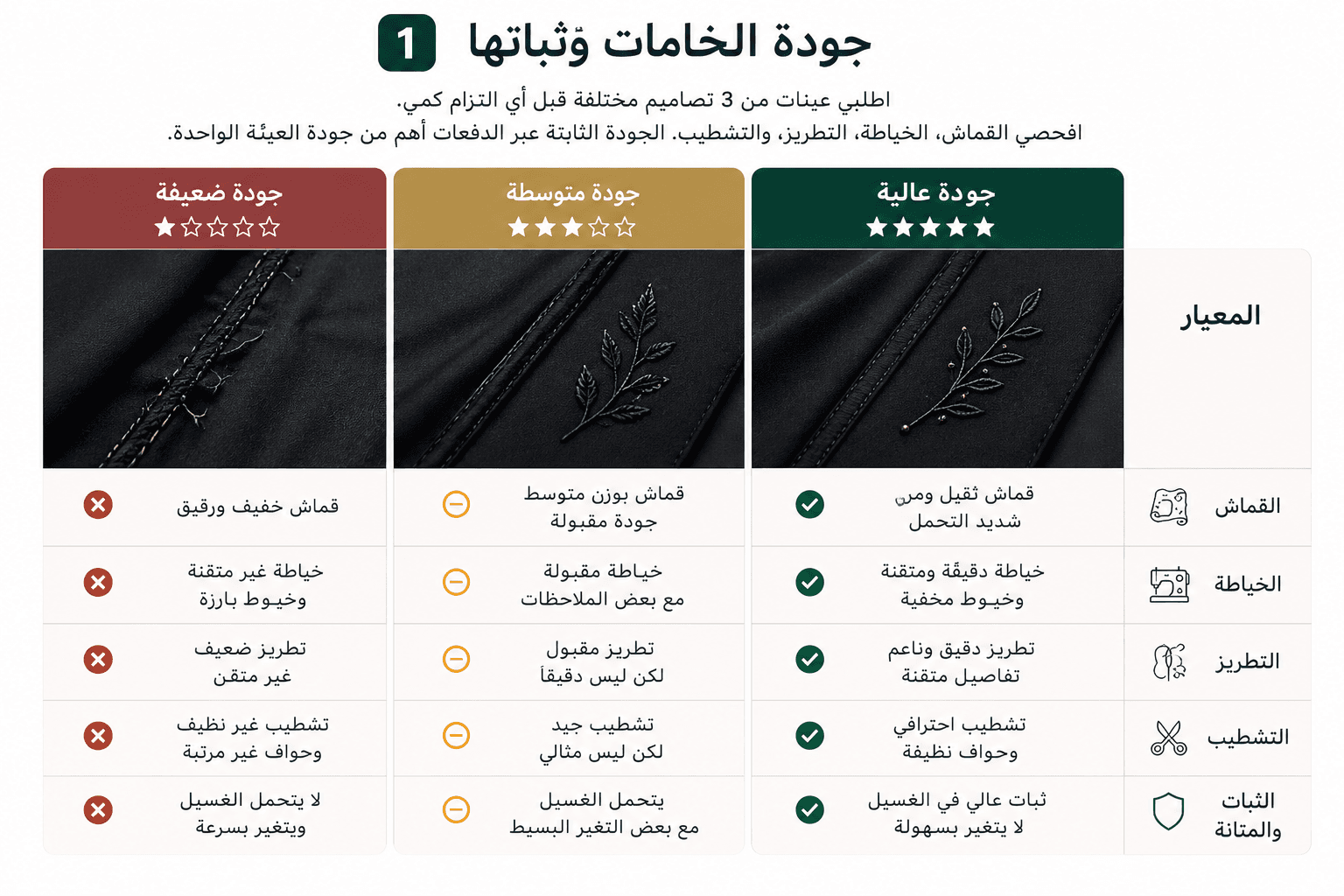
1. Fabric quality, and its consistency
Request samples of 3 different designs before making any volume commitment. Inspect the fabric, the stitching, the embroidery and the finishing on each one. Then ask the harder question: can this be repeated? Consistent quality across batches matters far more than the quality of a single sample, because your customer's second purchase is judged against her first. A supplier who is excellent once and uneven afterwards is worse for a brand than one who is merely good every time.
2. Delivery reliability
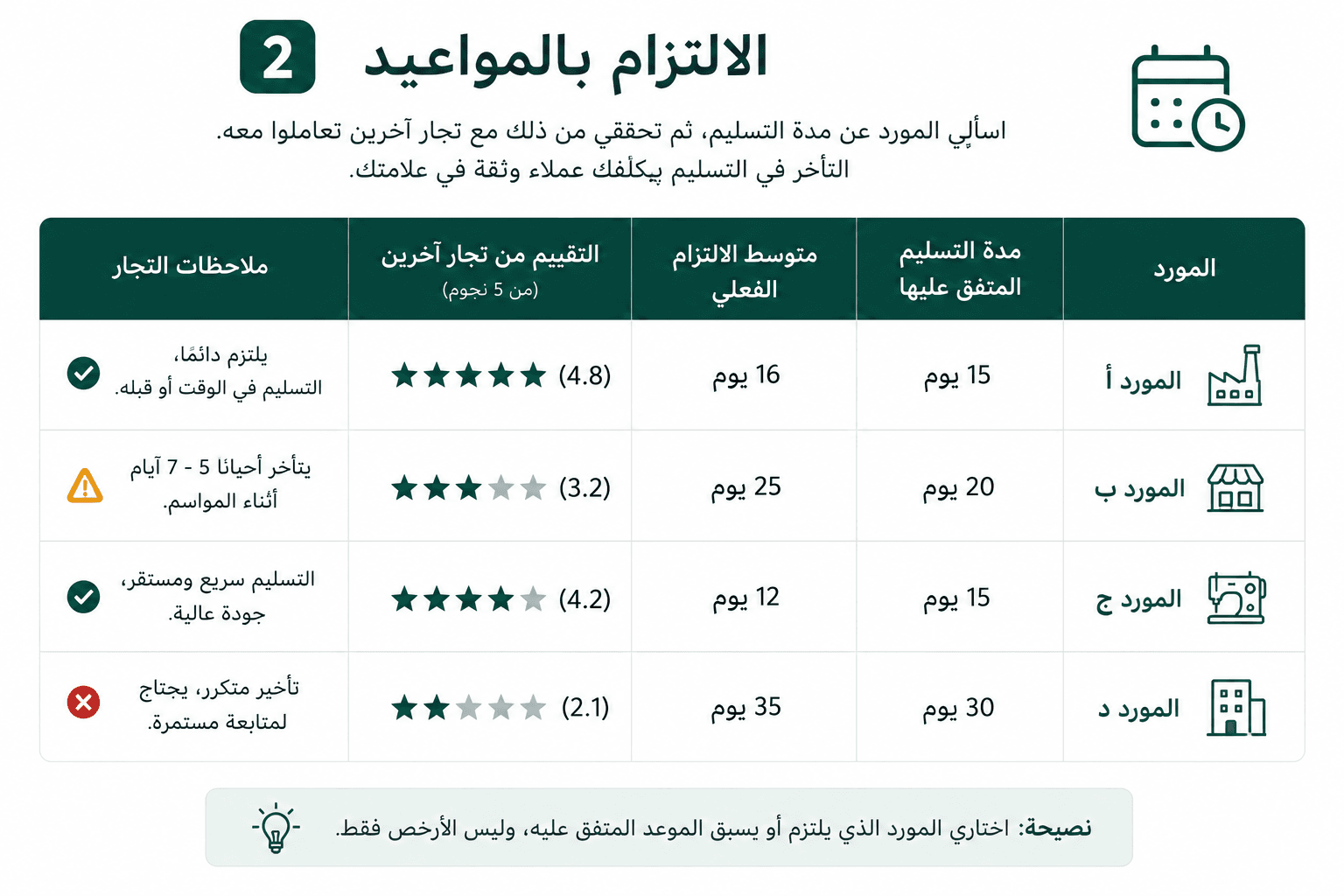
Ask the supplier what the lead time is. Then verify that answer with other merchants who have actually worked with them — this is the single most useful reference check available to you, and it costs one message. A supplier's stated lead time is a target; their real lead time is a track record. Late delivery costs you customers and costs you trust in your brand, and neither of those is recoverable with an apology email.
3. A workable minimum order quantity
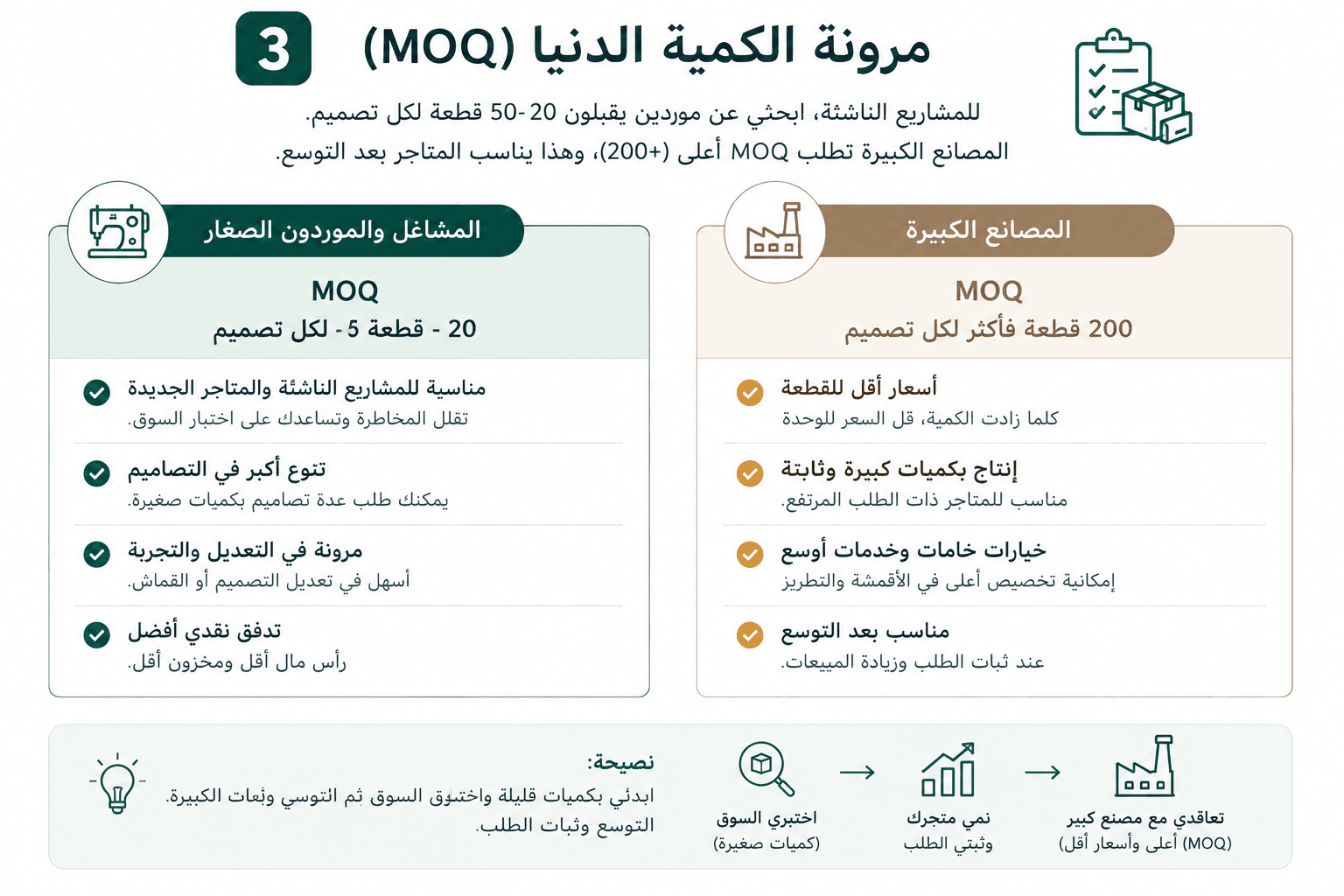
For a new business, look for suppliers who will accept 20 to 50 pieces per design. That range lets you test designs rather than bet on them. Large factories typically require a higher MOQ of 200 or more pieces, which is the right fit once you have expanded and know what sells — but taken on too early, a high MOQ converts your working capital into inventory of a design that hasn't been validated yet.
4. Transparent pricing
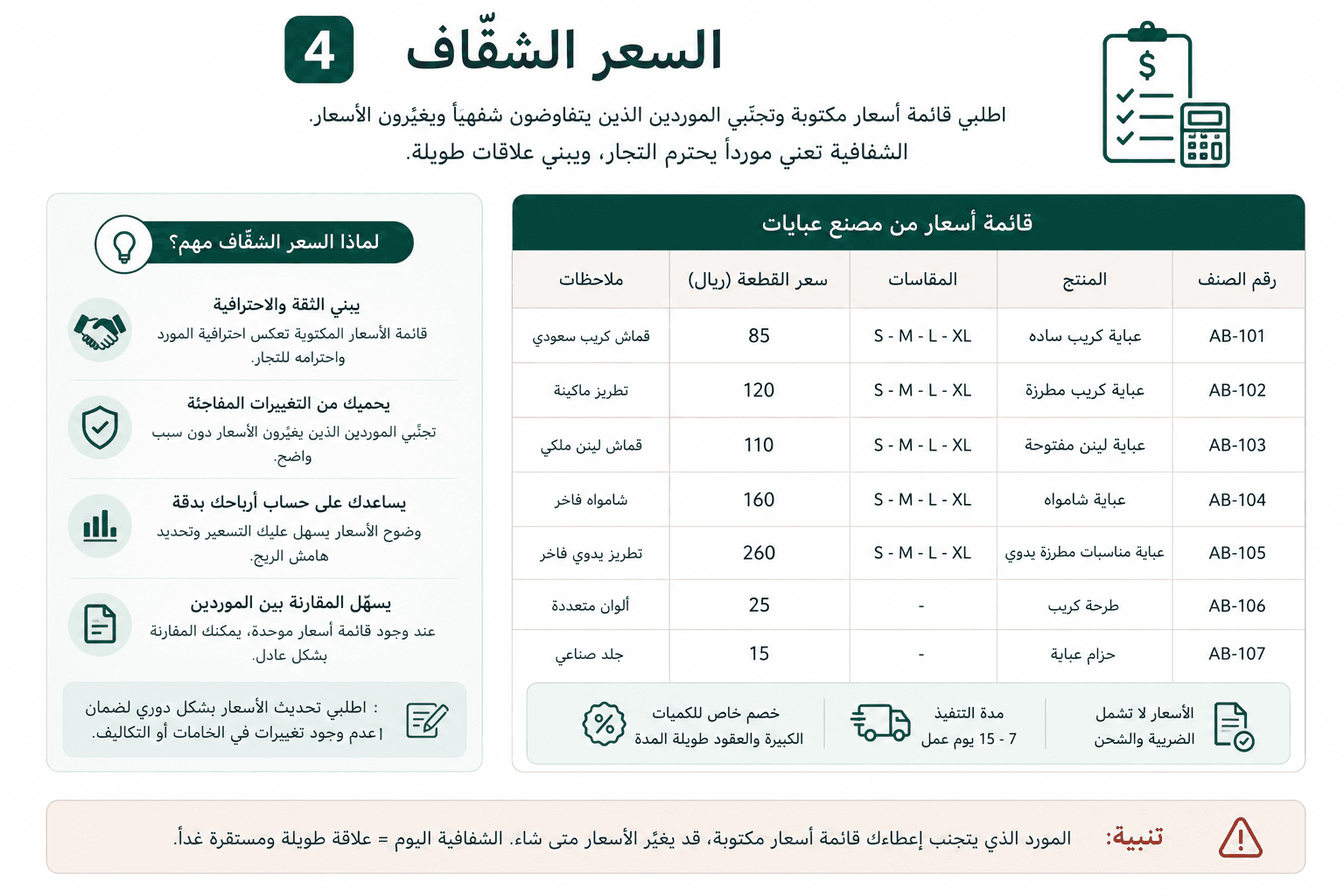
Ask for a written price list. Avoid suppliers who negotiate verbally and change prices from one conversation to the next. This is less about the price itself and more about what the behavior tells you: transparency means a supplier who respects merchants and expects to build long relationships. A supplier who won't put numbers in writing is telling you what the relationship will look like when something goes wrong.
5. Response speed
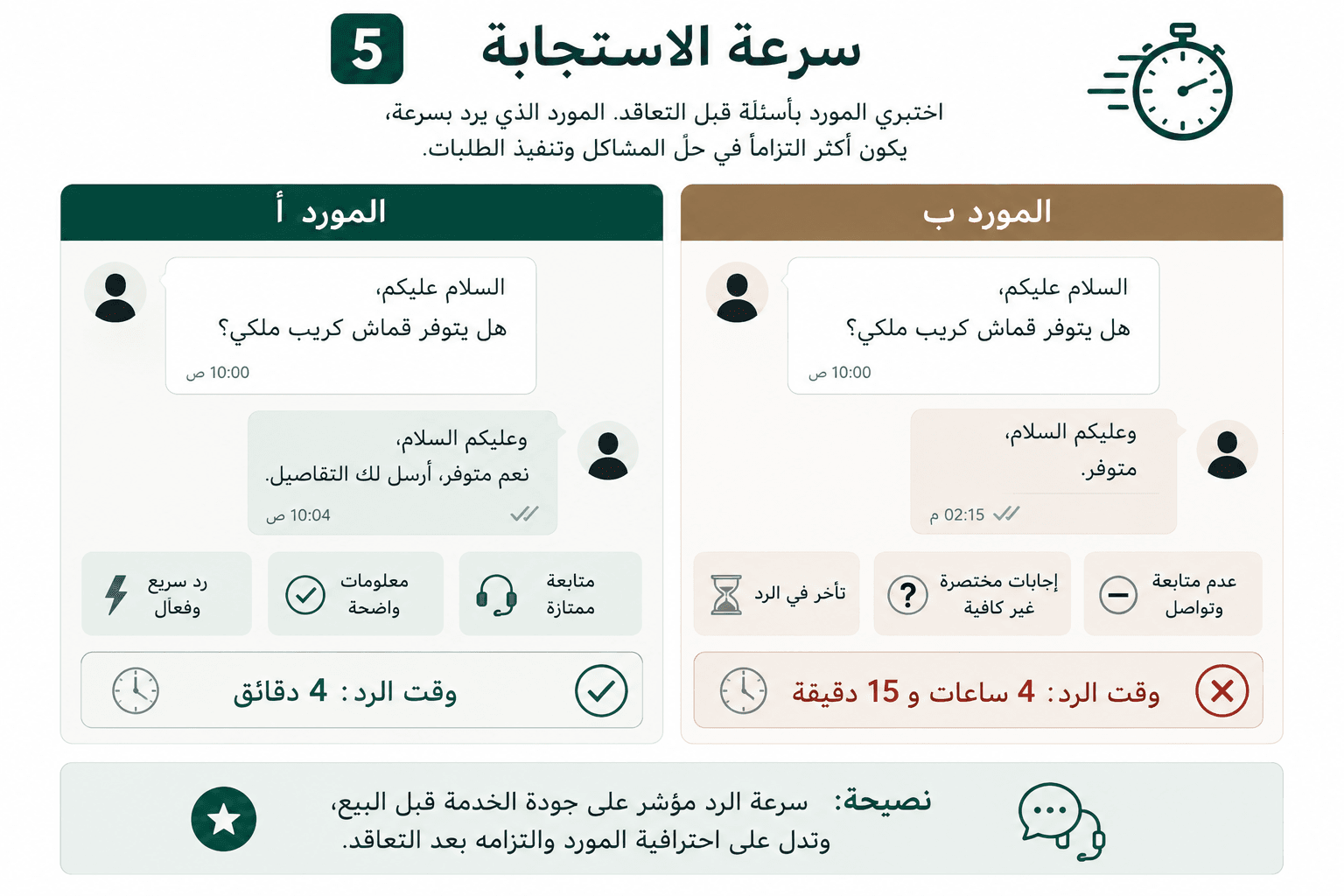
Test the supplier with questions before you contract with them. A supplier who replies within hours during the courtship will reply quickly when there's a production problem. A supplier who takes days to answer a simple pre-sale question will take longer than that in a crisis — and production problems are always a crisis, because they arrive with a customer already waiting.
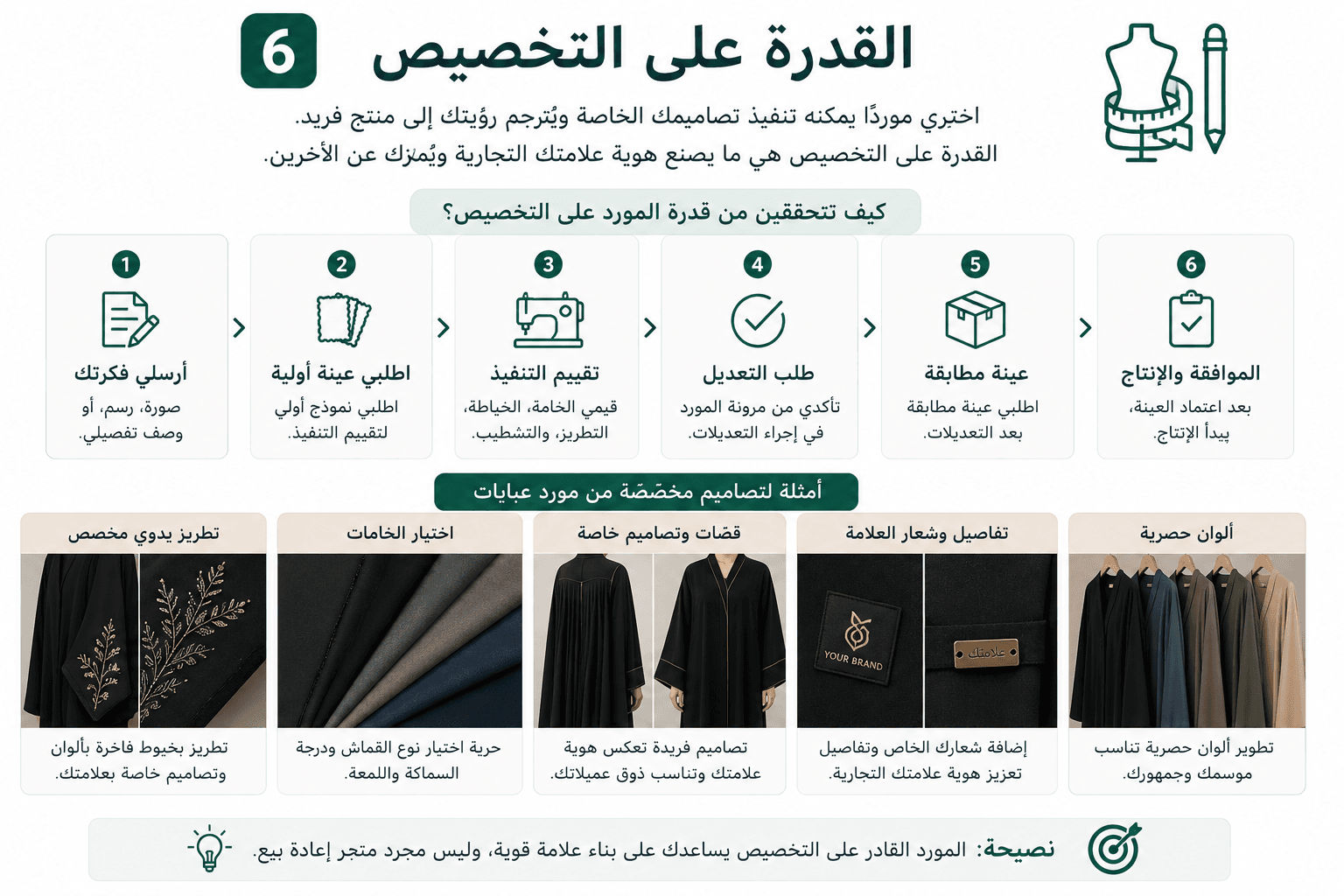
6. Customization capability
Can the supplier produce your own designs, or only their existing ready-made range? This is the line between building a brand and running a resale store. If every piece you sell is available from the same supplier to anyone else who asks, your only remaining differentiator is price, and price is the one competition nobody wins. Customization capability is a prerequisite for a distinctive label.
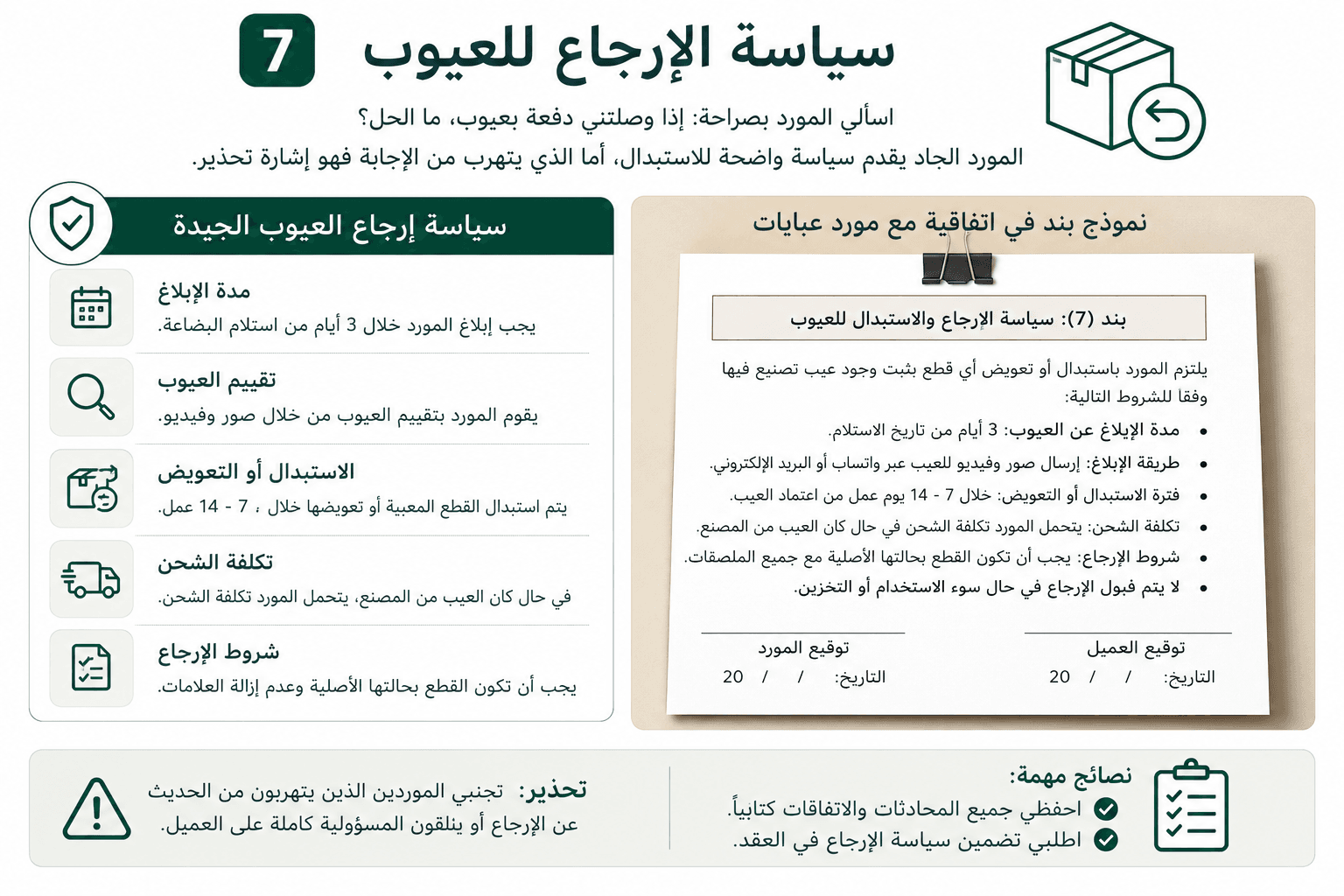
7. A defect return policy
Ask directly: if a batch arrives with defects, what happens? A serious supplier has a clear replacement policy and will tell you what it is without hesitating. A supplier who deflects the question is a warning sign — not because defects are unusual, but because how a supplier handles them is the whole relationship compressed into one answer.
📝 Important notes
⚠️ Don't depend on a single supplier. Start with one primary supplier, but test at least two backups so a supply interruption doesn't stop your business.
Visit the factory or workshop in person before agreeing to large quantities. One visit reveals what a month of messaging does not.
🧩 How many suppliers you actually need
At the start, two: one primary and one backup. That's the minimum that protects you against a single point of failure without spreading your volume so thin that no supplier takes you seriously.
As the store grows, 3 to 5 specialist suppliers works better than one generalist — one for everyday abayas, one for occasion pieces, one for hand embroidery. Specialization gives you better work in each category, and the spread protects the business. The cost is coordination, which is why it comes later rather than at launch.
❓ Frequently asked questions
Should I start with a local supplier or import from China and Turkey?
For a new business, local suppliers are better: more flexibility, lower MOQ, easier communication. Importing starts to make sense once you are placing large orders of 500 pieces or more and the price difference becomes significant relative to the shipping time.
How many suppliers do I need?
At the start, a primary supplier and a backup. As the store grows, 3 to 5 specialist suppliers — one for everyday abayas, one for occasion pieces, one for hand embroidery. The spread protects the business and gives it depth.
How do I negotiate price with a supplier?
Start by asking for the base price, then offer higher volume in exchange for a discount. Suppliers prefer long commitments, so consider a 6-month contract with fixed quantities rather than scattered one-off orders.
What is the fastest way to check a supplier's reliability?
Two things: samples from 3 different designs, and a conversation with another merchant who has ordered from them repeatedly. The sample tells you what they can do; the other merchant tells you what they do every time.
Is the cheapest supplier ever the right choice?
Rarely. Price is easy to compare and consistency is not, which is why price gets over-weighted. A supplier who is 10% cheaper and occasionally late will cost you more in lost customers than the discount is worth.
📖 Further reading
- How to start a successful abaya business
- How to export your abayas to the Gulf and worldwide
- Abaya pricing: a smart profit strategy
The best supplier is not the cheapest one. It's the most consistent and the most committed. Judge suppliers the way a professional buyer would: on repeatability, not on the first sample.
Building your abaya business? Create your store for free and start selling.